
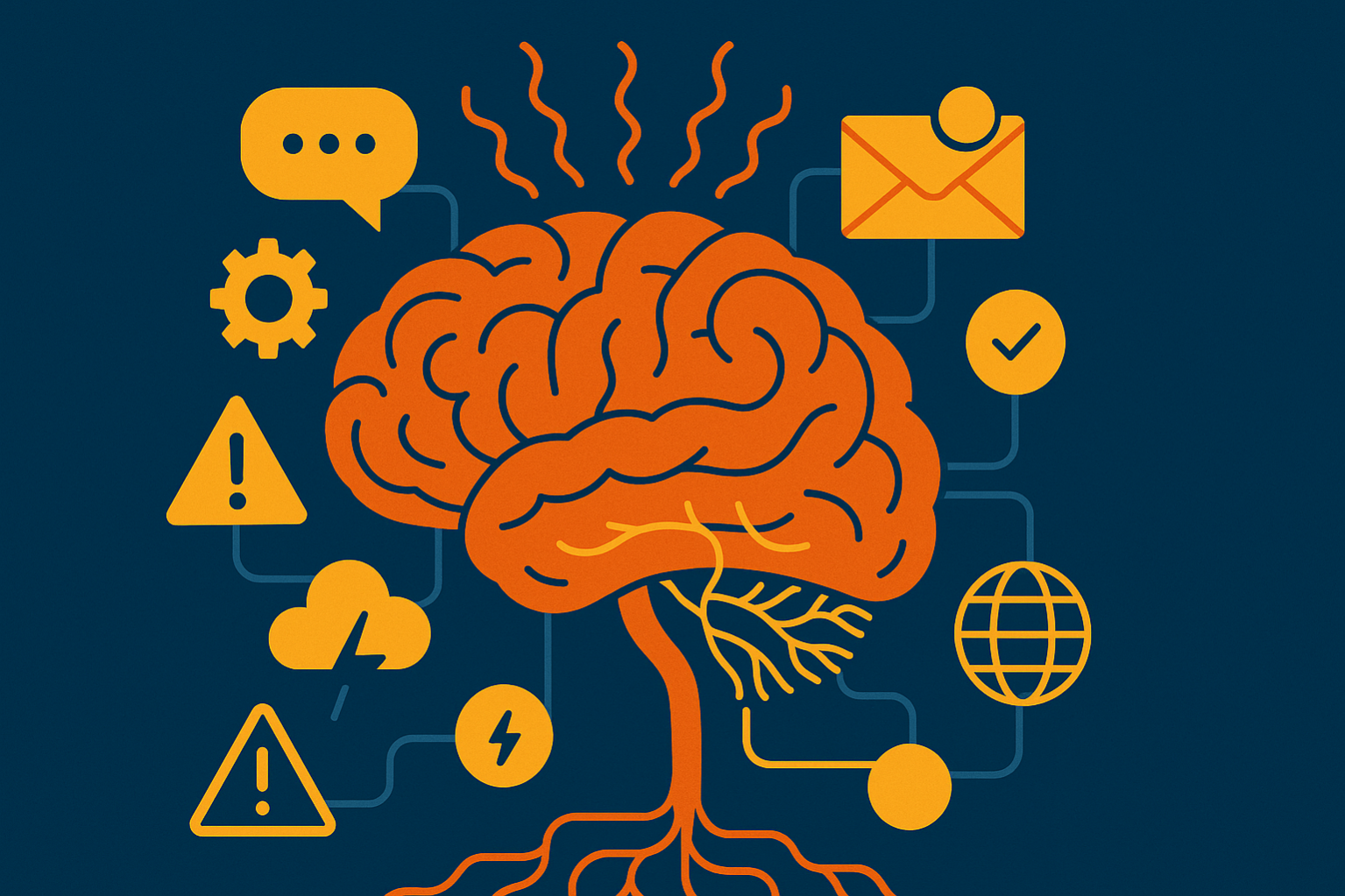
Future of Work
It wasn’t that long ago, say, the 1950s, when life felt more stable for many families. People often lived in the same town their whole lives, worked one steady job until retirement, and passed down traditions that barely changed from one generation to the next. The pace of life matched what our nervous systems were built for: steadiness and predictability.
By the 1970s, that world started to tilt. Economic turbulence, social change, and new technologies chipped away at stability. By the 1980s, computers, global markets, and corporate restructuring sped things up even more. The “job for life” became a relic.
I saw this up close in my first job as an IT recruiter in the late 90s. The people who advanced weren’t the ones who stayed put. They were the ones who hopped. Those who clung to stability were often overlooked. What once signaled loyalty now looked like stagnation. Stability had flipped from strength to weakness.
By the 2000s, the pace wasn’t just faster. It was a roller coaster. Smartphones, social media, globalization, and now AI reshape the way we live, work, and even see ourselves. Change no longer feels generational. It feels constant.
Generations Raised on the Ride
Our nervous systems are wired to build around predictability. It’s how humans historically survived. But beginning with Gen X, stability became harder to come by.
- Gen X grew up with divorce rates climbing, households shifting, and family life less predictable. Many learned independence and adaptability early, skills that served them when technology and globalization accelerated.
- Millennials entered a world where digital disruption, economic turbulence, and cultural shifts were constant. They knew from the start that reinvention and lifelong learning were required.
- Gen Z has never known anything but acceleration. Digital natives, they can pivot quickly and thrive in diverse environments, but they also face rising anxiety. Their nervous systems are shaped not only by tech but by global instability and climate concerns.
Growing up in constant change has built adaptability. But it has also created a generation more vulnerable to chronic stress.
Technology: The Double-Edged Sword
Technology is both the accelerant of this roller coaster and, ironically, one of the best safety harnesses.
As Taha Yıldırım writes, “The technological revolution has altered society’s fabric in unprecedented ways, with the pace of change accelerating at an exponential rate.” That exponential speed explains why so many feel anxious and adrift.
But technology also creates lifelines. A child questioning their identity, an entrepreneur in a small town, or someone struggling with mental health can find belonging, wisdom, and support at the touch of a screen. Those connections can calm the nervous system as much as sitting in a trusted friend’s kitchen.
The irony is striking. The same devices that flood us with alerts and comparisons can also connect us with people who regulate, encourage, and steady us. The challenge is not whether technology is good or bad. It’s whether we learn to use it consciously.
So Where Does That Leave Us?
We can’t slow the ride. But we can strengthen our grip. That means:
- Awareness: noticing when our nervous system is in overdrive.
- Connection: seeking out people and communities that regulate rather than deplete us.
- Resilience: building habits that make us stronger, from continuous learning to intentional pauses.
Our nervous systems weren’t built for this pace. But with awareness, connection, and resilience, we can learn to ride the roller coaster instead of being thrown by it.
That’s the journey I explore more deeply in my upcoming book, Learn to Love the Roller Coaster: How to Thrive in an Ever-Changing World. Because while we may not control the speed of change, we can choose how we adapt and even grow stronger because of it.
Additional reading: 7 Small Ways to Reset and Regulate Your Nervous System (Psychology Today)


